

Kitchen Cabinet Grease: Remove Sticky Build-Up Easily
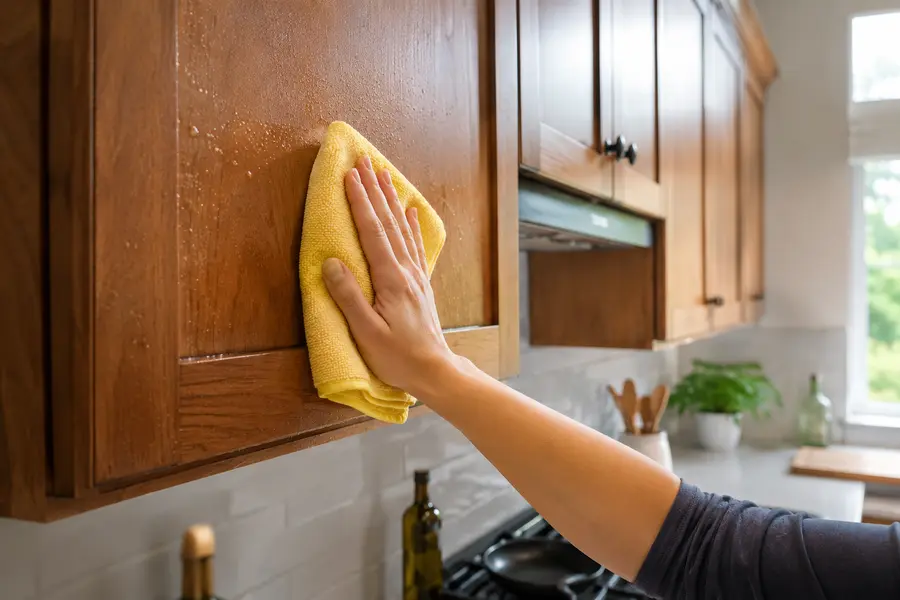
Kitchen cabinets are more prone to damage than other surfaces in the kitchen, yet they are the ones that typically get the least attention on maintenance. Often, kitchen countertops and flooring will be the main focus when it comes to regular cleaning. Cabinet doors generally just collect grease, food, fingerprints, and airborne dust without any type of cleaning. Over time, this build-up creates one layer of sticky grime, and a dull feeling associated with an unclean kitchen. Due to an Australian home’s busy schedule for cooking, the open-plan style of living, the use of oils and sauces, and generally heavy use of cooking oil creates a large accumulation of grease on the kitchen cabinets.The greatest part is you can pull sticky grease away from your surfaces without nagging your hands or purchasing fancy products.
With the right approach and a little effort, you can rejuvenate your cabinets and keep them looking new.This post provides practical kitchen cabinets cleaning tips that help you get rid of grease fast without harm to your kitchen. You’ll also find tips on cleaning wood cabinets to help keep natural finishes looking good and prolong the life of your cabinetry.
Understand Grease Build-Up
Kitchen cabinet grease builds up slowly and is often unnoticed until it makes surfaces sticky. During food preparation, small oil droplets are suspended in the air and deposited on surrounding surfaces. Dust adheres to the oily film and forms the thick layer found on handles, the edges of cabinets and on cupboards in the vicinity of cook plates. Cabinets that are placed above stovetops or near prep areas generally accumulate grease more quickly than other kitchen locations.About the source of grease-staining the reason why understanding what leads to build-up of grease is handy for effective cleaning of kitchen cabinet is because it directs your attention to where dirt accumulate the most.
Gather Safe Cleaning Supplies
It is best to gather all the tools needed for dismantling the grease before you start the cleaning and degreasing process. For many greases in the house, warm and soapy water is enough. To clean your surfaces without any streaks, go for microfiber cloths. A combination of equal parts white vinegar & water also works well for removing the heaviest grease build-ups . Do not soak cabinets in liquid when cleaning.For homes with wood cabinetry it is always a good practice to trial a small inconspicuous area to see how the product performs.
Essential Cabinet Cleaning Supplies
| Cleaning Item | Best Use | Benefit |
| Microfibre cloth | Daily cleaning | Gentle and reusable |
| Dishwashing liquid | Light grease | Cuts through oils |
| Warm water | General cleaning | Safe for most surfaces |
| Soft sponge | Sticky spots | Protects finishes |
| Diluted vinegar | Heavy grease | Helps remove residue |
Using the right products often reduces cleaning time and protects cabinet surfaces.
Start With Gentle Cleaning
One of the worst blunders people make is scrubbing too hard. Instead, start at one end of the cabinet with a damp microfibre cloth and wipe to the other end, dusting and wiping away any dust or dirt that has settled on the cabinets. Then clean the larger areas with warm water and a little detergent. Work in small sections. and wipe in the direction of the grain of the cabinet when you can. Once the grease has been removed, immediately dry with a clean towel. This step avoids moisture spotting and seals the cabinets. These easy kitchen cabinet cleaning tricks will likely get rid of more grease than you expect without the help of stronger chemicals.
Tackle Stubborn Sticky Areas
Aged deposits of grease may be more difficult to remove.Be sure to test a corner or small out of sight area first, apply a damp cloth with a cleaning agent to the sticky spots and then let it sit for a moment before cleaning. This helps soften the residue for easier removal. Handles, corners, and surfaces near cooking appliances can take two or three cleaning rounds. Avoid metal scrubbers or abrasive pads as they can permanently scratch surfaces. If you find there is still grease after washing, clean it again but do not use any more force. For heavily neglected kitchens, seeking advice from expert cleaning operators can help identify safe methods for restoring delicate cabinet finishes. Patience usually produces better results than frenzied scrubbing.
Protect Wood Cabinet Surfaces
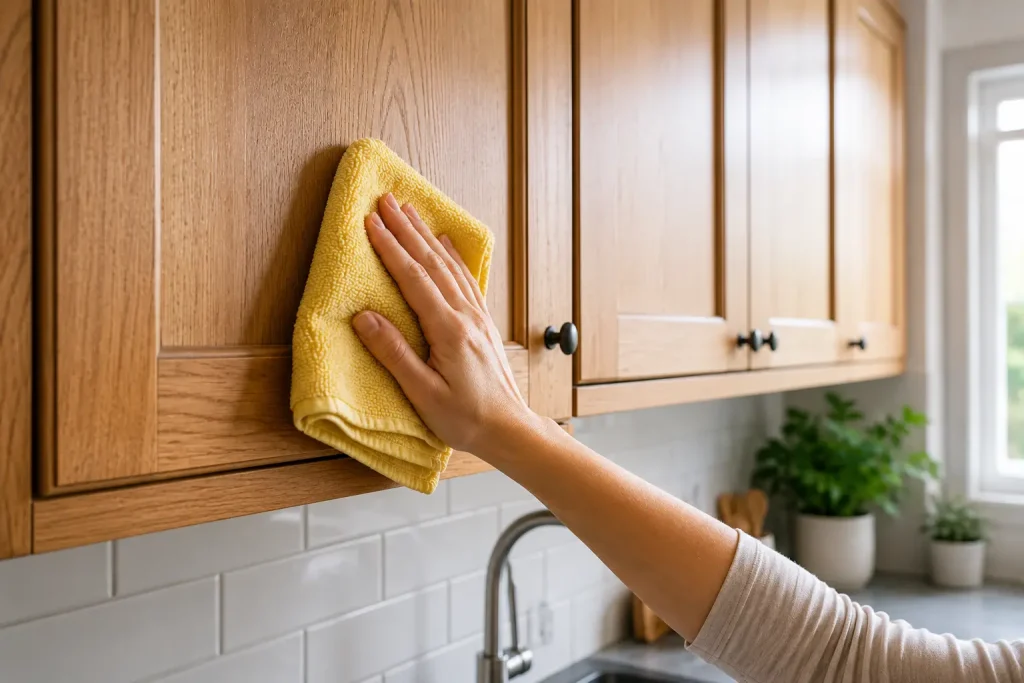
Care needs to be taken when cleaning wood cabinets, since the wood might have a reaction to moisture and cleaners that is hard to predict. Soaking wood cabinets is not the best option. Only wipe wood cabinets with a slightly damp cloth and make sure to dry immediately after wipe down. If wood gets too wet, it may swell, warp or the sealants may even break down. Avoid using very acidic products unless they have been advised for your cabinet finish. Solid wood kitchen cabinets should be refinished at least every few years following an initial reinforcement sealing to protect the wood from daily wear and tear and keep it looking at its best. Natural timber cabinets also can be maintained occasionally with natural wood care products to uphold their appearance and strength.
Build Better Cleaning Habits
Preventing sticky greasy buildup from forming on surfaces is probably the simplest way to remove it. By regularly cleaning your surfaces you will reduce the amount of time it takes for you to deep clean those surfaces in the future. Simply wiping down with a cloth cabinet fronts once a week prevents grease from becoming deeply embedded. Also, you may find that there is more than just some small amount of elbow grease needed when it comes to cleaning near the top of your stovetop. Most likely some routine cleaning will give your kitchen a new fresh and clean-looking appearance.
Simple Cabinet Maintenance Schedule
| Frequency | Recommended Task |
| Weekly | Wipe cabinet fronts |
| Fortnightly | Clean handles |
| Monthly | Deep clean visible grease |
| Quarterly | Full cabinet refresh |
Consistent routines make kitchen cabinet cleaning faster and easier over time.
Prevent Future Grease Build-Up
Prevention is better than cure deep clean. Using exhaust fans when cooking will prevent or minimize the deposition of oils in the air on the cabinets. Cleaning the splashback and surrounding areas also reduces the amount of grease that can transfer. Using lids whenever possible when cooking will reduce the amount of oil moving around the kitchen. Duct cleaning and hood maintenance will help to prevent cleaning of cabinets down the road. Households having open-plan kitchens may require a little more upkeep owing to more diffuse cooking soiled.
Keep Cabinets Looking Fresh
Clean cabinets can make the whole kitchen look different. After the grease is removed, you should go over the doors to check for scratches, chipped finishes, or software hardware. Little maintenance and routine maintenance contribute to the life of a cabinet and keep it looking polished. Replacing some of the old handles or tightening the hinges can really help the feel of the kitchen as a whole. Regular maintenance and sensible wood cabinet cleaning practices, when combined, result in cabinets that look new longer.
Conclusion
Tacky kitchen cabinet grease can be tough to clean off, but with the right approach, you can have it off in a snap and manageable to deal with. These kitchen cabinet cleaning tips show that gently cleaning, regular maintenance, and prevention are a lot more effective than hard scrubbing. Plus some simple tips for cleaning wood cabinets, your cabinets will be cleaner, brighter, and easier to keep clean. Start by cleaning just one curb side of your kitchen no matter how little you do, and work cleaning into your routine daily to help maintain. A clean kitchen all year round. For more practical household cleaning advice, check out best home remedies to get sweat stains out of shirts. Saving yourself time by Cleaning A Little Today!