

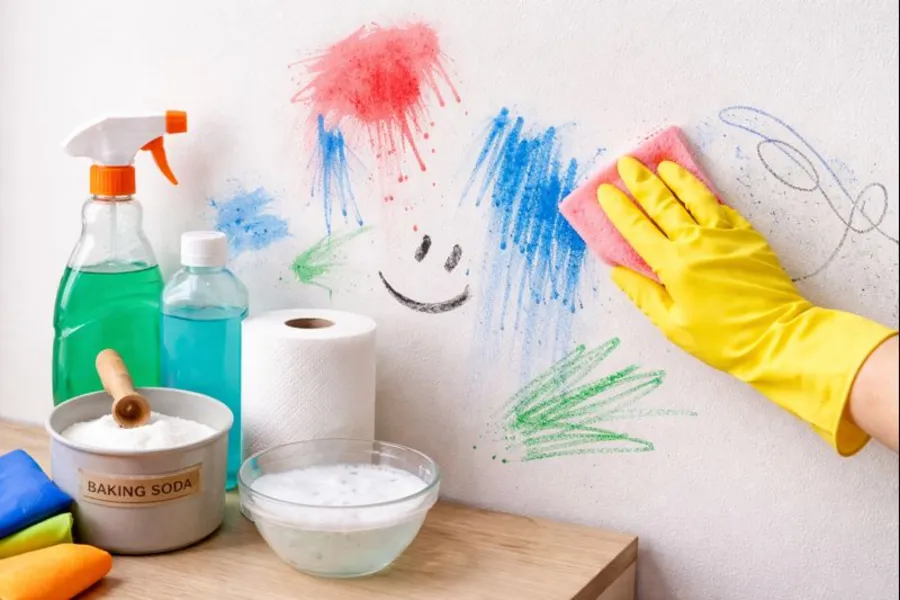
How to Remove Ink, Paint and Marker from Walls
Did you only find some strange scribbles, paint, or permanent markings on your wall, and your heart sank? Walls are supposed to be calm, clean and beautiful to make the home look beautiful, but a single accident can alter all these. It could be either an artistic attempt of a child, an accident with paint, or even an ink pen that got out of control, too, but the truth is that stains on the walls are more prevalent than we want to acknowledge.
Repainting and hiring to repaint a house do not necessarily go hand in hand. By a little patience, proper technique, tools and materials, it will be possible to remove ink, paint and marker stains without causing damage to the walls. We will do it one by one and get your walls to live again.
1. Before the Task: Important Reminders
There are a few preliminary measures that can be performed before the cleaning begins in order to protect the wall from being damaged. It is a good practice as per cleaning professionals, to check every time that a cleaning substance will not cause any harm to the paint like lightening, roughening, or even complete destruction by first applying it on a small and hidden area.
It is quite useful to know the type of finish of your wall, whether it is matte, semi-gloss or gloss, as this will be the main factor in the selection of the safest method of cleaning. Matte walls are the most delicate, while gloss and semi-gloss can bear a little bit of cleaning.
2. How to take off Ink Stains on the Walls
Stains made by ink may readily take up the wall paint, particularly when they are not treated over an extended duration. Rubbing alcohol or hand sanitiser on a soft cloth or cotton ball is one of the solutions. Blotting the stain should be done gently, not by rubbing, because this will only cause the ink to spread more on the wall. Operate gradually, and the ink will be raised in tiny bits.
Baking soda paste prepared by combining baking soda with a little wate,r is another not so harsh one. Neatly apply the paste and rub it in circular light movements, then wipe it off using a damp cloth. These techniques can be effective on fresh or fresh light ink stains and must always be used with some kind of drying agent applied afterwards so that no water marks are left.
3. Removing Paint from Walls
Paint stains are typical in undertaking home improvement works, and they should be dealt with depending on whether the paint is dry or wet. Wet paint is more convenient to handle and must be wiped off at the first stage with a moist cloth. Quickness helps to avoid the bonding of the paint to the wall surface and makes it more difficult to remove it.
In the case of dried paint, it is important to start by scraping the extra paint lightly with a plastic scraper or an old credit card. Metal tools should be avoided because they scratch the wall. After peeling off the surface, put warm soapy water and leave it to loosen up the paint left behind. Using a sponge gently wipes the walls to remove the residue without destroying the finish on the walls.
4. Eliminating Walls Permanent Marker
The stain of permanent marker may appear very daunting, but it is possible that it may be erased using household products. Non-gel toothpaste of white colour can also be used directly on the stain and rubbed with a damp cloth. This soft roughness serves to dissolve the marker ink, and not the paint.
When applied cautiously to the stain and then immediately wiped off with a clean and damp cloth, alcohol rub or nail polish remover may also be helpful. A magic eraser can be used on difficult stains, but it must be done carefully and too much use might lead to the paint covering getting dull or thin.
5. Green and Organic Cleaning
In case you want to use environmental-friendly or low-chemical, there are certainly a number of natural solutions that will help in getting rid of the wall stains. If used sparingly, white vinegar mixed with warm water can be applied for the removal of light paint and ink marks. Mixing lemon juice with baking powder can also serve as a tiny stain remover.
The said natural remedies work best for light-coloured stains and should be used with great care. They may need a little more time, but on the other hand, they will have extremely small risk of causing serious chemical damage and are also safer in households with children or pets than other methods.
6. What Should Be Avoided During Wall Cleaning?
There are different kinds of house cleaning mistakes that can unintentionally cause more damage than good to walls. Strong chemicals like bleach or ammonia will not only remove the paint but also create non-removable discoloration spots at the same time. If water is used too much, the painting will lose its adhesion, and will then come off or leak into the drywall, which is irreversible damage.
Walls painted with matte paint are very delicate and cannot stand too much scrubbing, which will create either glossy spots or scars that are hard to remove. Also, coloured or coarse cloths are not to be used, as they can give out the colour or mark the surface.
Conclusion
Ink, paint, and permanent marker stains may look like a disaster, but with the right approach and safe cleaning methods, most wall marks can be removed without repainting. Using simple household items and gentle techniques helps protect the wall surface while restoring its clean appearance. However, if stains are too stubborn or the paint starts to fade, it is best to contact cleaning experts to ensure your walls are treated professionally and safely, keeping your home fresh and damage-free.