

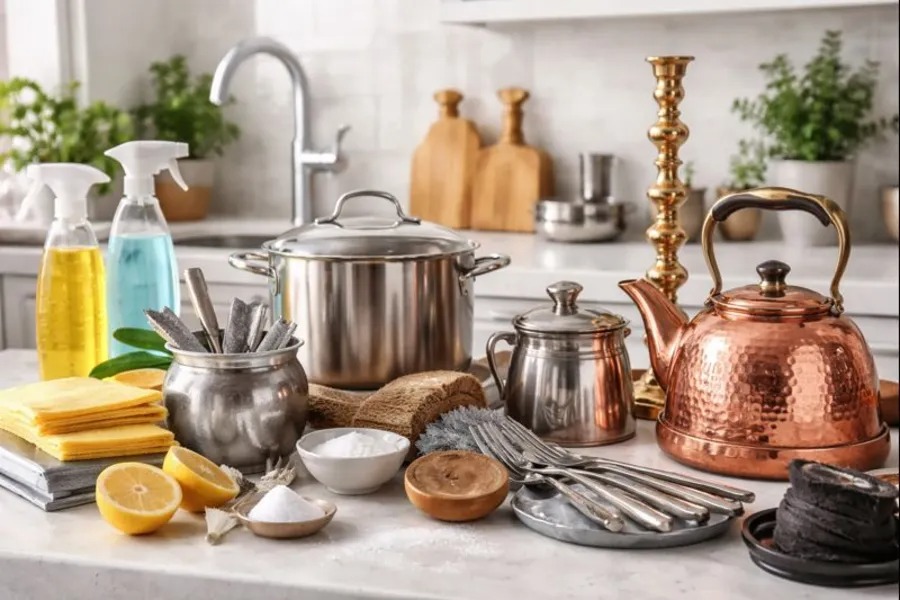
Have you ever been at home, and thought why some metal objects look shiny, as compared with others which look dull, rusty and discoloured? Metals can be found everywhere including door handles, sink washboards, appliances, tabs, decoration, cookware and furniture. Each metal is various and should be cleaned in a suitable way. Use it poorly and it will be scratched, tarnished or get its finish. Do it and it comes back lovely and long lasting gloss.
Cleaning of metals does not only entail making it shiny and bright, but it is also concerned with the strength and beauty of the metals. This is the blog where you will be taught on how to clean different types of metals in your own home as well as clean stainless steel, brass, copper, aluminium, silver, among others, without damaging them.
1. Cleaning Before You Know Your Metal
Cleaners react differently with various metals and therefore, the first and most vital thing to do is to know the metal you are dealing with, as per cleaning professionals. Stainless steel is resistant to rust, copper is likely to form patina, silver scratches and aluminium scratches. Look at the mark of the manufacturer on the appliances or cookware, the colour and texture or simply a magnet test to determine the type of steel and other metals.
By using the incorrect cleaner, it may remove any coatings, take away shine or even discolour the surface permanently. The appropriate procedure and product choice become accessible and far safer once the type of metals is known.
2. How to Clean Stainless Steel: Leave it Streak-Free
In sinks, refrigerators, taps and cookware, stainless steel is mainly used. Fingerprints, smudges and watermarks are produced easily. Warm soapy water and a soft microfiber cloth should be used to start cleaning the surface by wiping it with the water using a soft microfiber cloth in the direction of the grain to prevent dull streaks.
In case marks are left, they can be removed by means of a stainless-steel cleaner or diluted vinegar in order to remove stubborn marks. Once cleaned, it is dried well to eliminate spots of water, and adds back the shine. Metallic poles like steel wool must be avoided at all times since they scratch the metal and destroy its smooth appearance.
3. Brass: Revive the Golden Glow
Brass is admired because of its warm golden hue in interior items, lamps, door handles and antique objects, yet it fades away with time. During end of lease cleaning, brass surfaces often need extra attention to restore their original appearance. Always clean before it is found that it is either solid brass or something that is plated with brass, since brass-plated is easily damaged. When a magnet adheres, it is normally plated with metal underneath a coating of brass. Solid brass can be cleaned using the home made mixtures like lemon juice and baking soda as it does not contain harsh substances thus after washing and polishing, it regains its shine.
The surfaces of brass-plated, however, will only require a light soap and water, and a slight wiping, as heavy work will invariably take off the thin coat of brass.
4. Copper: Glitter, Do Not Take Away the Character
Copper has a natural tendency to darken and develop patina and this characteristic is valued by most people as a sign of antiqueness. To people who love bright, one can safely refresh copper with lemon and salt or vinegar solutions laid on the surface. Spotting and streaking are avoided by rinsing and drying them completely.
Copper is not to be kept long in water, as it may make joints weak or ruin linings in cooking pots. Expert cleaning must be in keeping with the harmony between regaining the shine and retaining the natural aged quality. Many items of copper are prized.
5. Silver: Clean Tarnish Easy
Silverware, jewelry and ornaments tend to become black due to oxidation with time. Erosion should be done carefully so as to not to ruin delicate designs. Silver polish and soft cloth buffing are both effective and safe and can be used commercially. A basic domestic process is equally good: a short dipping in a hot water solution of a foil-lined bowl containing silver and baking soda and salt forms a chemical reaction to which the tarnish attaches itself.
Then, it is followed by rinsing and soft drying to restore the shine. Hard materials such as toothpaste are not applicable as they leave scratches on fine patterns and depreciate in terms of value.
6. Aluminium: Clean and Non-Scratching
Aluminium is commonly applied in cookware, frames, utensils and window tracks. It is easily scratched and thus has to be cleaned. Standard dirt and grease are normally removed using warm water and dish soap. Where dullness or oxidation is foun,d a weak solution of vinegar will restore clearness. Washed in water should be dried off because of water marks and the aluminium should be shiny.
Aluminium should not be treated with chlorine bleach as it will also react with the metal and will result in discolouration or surface damage.
7. Chrome: Revive the Finish Mirror
Bathroom fixtures, taps, bicycles, and car parts are finished with chrome. Although aesthetically pleasing, chrome is easy to smear and to get water spots. It can be kept fresh with the help of regular cleaning using mild soap and water. Obstinate marks are also responsive to vinegar, which is rubbed on a cloth and wiped over.
After cleaning, a dry microfiber cloth can be used to give the mirror-like reflective effect back in a short time. Chrome coating is thin and therefore should never be rubbed with any abrasive pads that will leave scratches, revealing the underlying metal.
8. Cast Iron: Cleaning and Still Seasoned
Cast iron cookware is also tough and is appreciated due to its natural non-stick seasoning. It, however, requires special attention since it is damaged by soaking and dishwashers. Hot water and a firm brush should be used in cleaning and immediately after this, a good drying should be done to ensure rust does not occur.
The surface is seasoned and covered with a light coating of oil. When rust forms, light scrubbing and re-seasoning through heating with oil will, however, make cast iron essentially renewable, provided it is maintained.
Conclusion
The metal objects in the house can last many decades before they start to appear ugly with proper cleaning. To prevent scratches, discolouration, and damage, each type of metal should be treated in the most appropriate way and these variations can only be comprehended. Thoughtfully cleaned and carefully maintained, even the stainless steel appliances, brass decoration and silverware can be able to keep up their shine, durability, and beauty. while helping to remove ink paint marks and other stubborn stains without harming the surface.